Jev for LLM Evaluations
In the batch and flex workshop we built an eval for the FAQ agent and scored it with an LLM judge. Here we swap that judge for Jev, a model that returns typed decisions instead of generating text. We keep the same eval, ten agent answers with their tool calls and three good/bad checks each. One Jev request scores all three checks for one answer. On our ten-entry run it cost $0.000429 while the OpenAI judge cost $0.02439, about 57 times cheaper.
Jev is TypeSafe AI's decision model. It reads a piece of application state and returns a class per question. It generates no output tokens, so there's no output-token cost and no wait for streaming text. We ask a judge only to say good or bad, and Jev is built for exactly that.
We keep the OpenAI judge as the baseline and add a Jev judge through OpenRouter's decisions API. The same checks also run through Laya, an open-weights decision model that runs locally on a CPU.
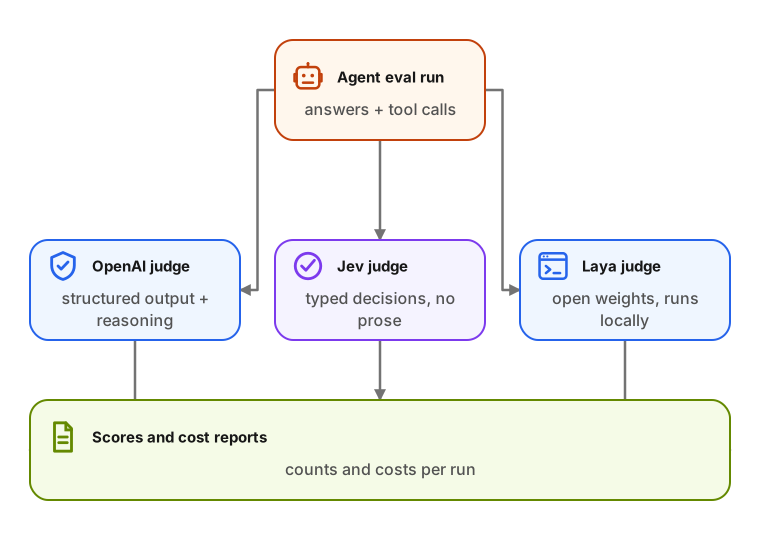
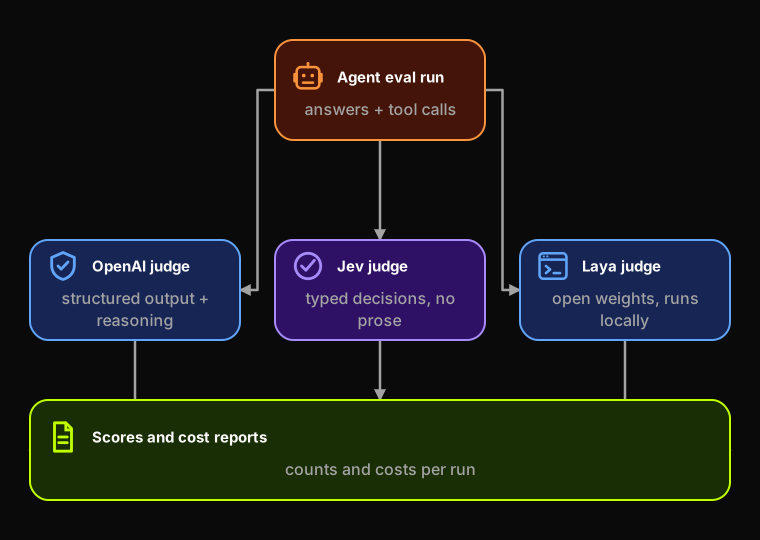
All three judges score the same run, so we can compare verdicts and costs directly. On our sample they agree almost everywhere. All three mark the same answer incorrect, and Jev and Laya return identical scores on every check.
We dictated most of the code as prompts to an AI assistant. We include the prompts, so you can reproduce the workflow with any agent you like. We tried one approach that didn't work: batching ten records into one request by making state an array. It looks natural, but the model returns one mixed answer. The final code sends one request per entry and runs them concurrently.
Links
Resources used here:
- Saving Money with Batch and Flex - the eval framework we port from.
- End-to-End Agent Deployment - the FAQ agent we evaluate.
- Jev on OpenRouter - the model page, with pricing and the decisions API.
- Laya - the open-weights decision model we run locally.
Upgrade to Basic to access this workshop
- Full workshop overview
- Complete page list
- Step-by-step tutorial
- Cancel anytime
Tutorial pages
Related content
Setting Up a Remote Environment for Agentic Workloads
A remote development box gives coding agents a stable place to run while you disconnect, reconnect, or change devices. We set up an Ubuntu server, protect SSH access, install the …
September 1, 2026
Building a Coding Agent: Python/Django Edition
For a newer, combined take, see Coding Agent with Skills. We build a small project bootstrapper for Django, a coding agent that takes a plain-language app request and copies a wor…
August 14, 2025